
Species field guide
American Goldfinch identification guide
Spinus tristis · Finches · Fringillidae
Observation focus
How to identify the American Goldfinch.
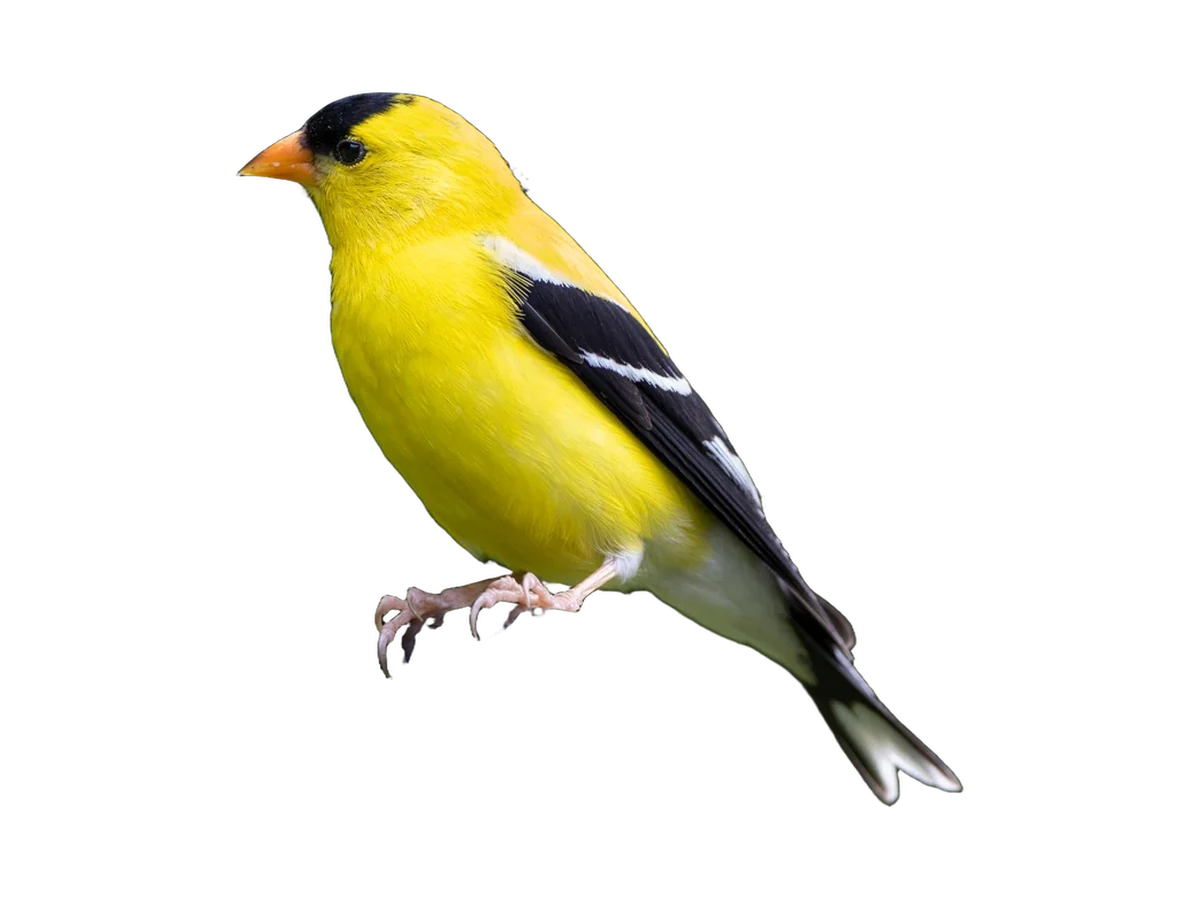
American Goldfinches are small, buoyant finches of open country and gardens. Breeding males are brilliant yellow and black, while females and winter birds are quieter brown or olive, but the compact bill, wingbars, and dipping flight remain useful clues.
- Breeding male: bright yellow body with a black forehead.
- Dark wings with pale wingbars in every season.
- Small conical bill, notched tail, and an unstreaked body.
Meet the bird
What kind of bird is the American Goldfinch?
American Goldfinches are small, buoyant finches of open country and gardens. Breeding males are brilliant yellow and black, while females and winter birds are quieter brown or olive, but the compact bill, wingbars, and dipping flight remain useful clues.
Where to look
Where can you find the American Goldfinch?
Check weedy fields, thistle patches, and seed feeders. A flock often gives itself away in flight: the birds rise and fall in a bounding path while calling between wingbeats.
Listen in the field
What does the American Goldfinch sound like?
The flight call is often remembered as “po-ta-to-chip,” delivered in time with the bird's dipping flight. Listen for the rhythm as well as the individual syllables.
American Goldfinch call, recorded by U.S. Fish and Wildlife Service
Open audio fileA short American Goldfinch call from the U.S. Fish and Wildlife Service sound collection.
Original recording by U.S. Fish and Wildlife Service · Public domain (U.S. federal government work). Bird Tone stores the cited recording for reliable playback. Original recording; Bird Tone made no audio edits. The recording loads only when requested and plays only after you press play.
Source check
Where do these identification notes come from?
These notes summarize beginner-facing identification, habitat, and behavior cues. Confirm a bird from several marks, its voice, and the setting rather than one color alone.