
Species field guide
Eastern Bluebird identification guide
Sialia sialis · Thrushes · Turdidae
Observation focus
How to identify the Eastern Bluebird.
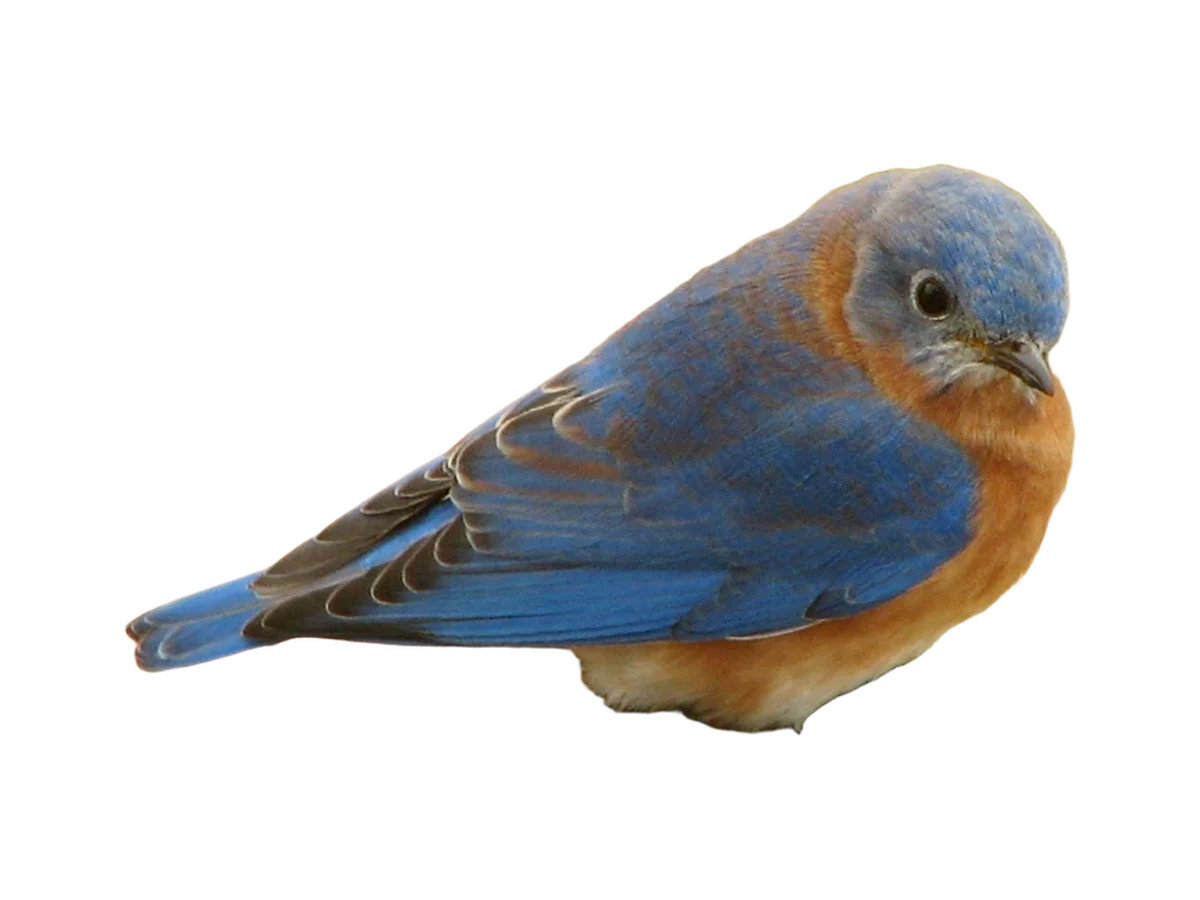
Eastern Bluebirds are small thrushes of open fields with scattered trees, fences, and nest boxes. Males are vivid blue above with a rusty breast; females carry the same pattern in softer gray-blue and warm brown.
- Royal-blue head, back, wings, and tail on an adult male.
- Rusty throat and breast set above a pale lower belly.
- Upright fence-line posture followed by short drops to the ground.
Meet the bird
What kind of bird is the Eastern Bluebird?
Eastern Bluebirds are small thrushes of open fields with scattered trees, fences, and nest boxes. Males are vivid blue above with a rusty breast; females carry the same pattern in softer gray-blue and warm brown.
Where to look
Where can you find the Eastern Bluebird?
Look along fences and utility wires for an alert, upright bird scanning the ground. Bluebirds drop from a perch to catch an insect, then return to a visible lookout, making their behavior as useful as their color.
Listen in the field
What does the Eastern Bluebird sound like?
Listen for a short, soft, wavering song rather than a powerful whistle. This example is a male singing near a nest box, with some low-frequency background noise lightly filtered by the recordist.
Eastern Bluebird song near a nest box, recorded by Jonathon Jongsma
Open audio fileA male Eastern Bluebird singing near a nest box at Nerstrand Big Woods State Park in Minnesota.
Original recording by Jonathon Jongsma · CC BY-SA 3.0. Bird Tone stores the cited recording for reliable playback. Bird Tone applied adaptive wavelet denoising with a -50 dB threshold, 20% strength, adaptive mode, and softness 2, preserved the stereo layout and full duration, then encoded deterministic Ogg Vorbis at quality 5. The recording loads only when requested and plays only after you press play.
Source check
Where do these identification notes come from?
These notes summarize beginner-facing identification, habitat, and behavior cues. Confirm a bird from several marks, its voice, and the setting rather than one color alone.