
Species field guide
House Sparrow identification guide
Passer domesticus · Old World sparrows · Passeridae
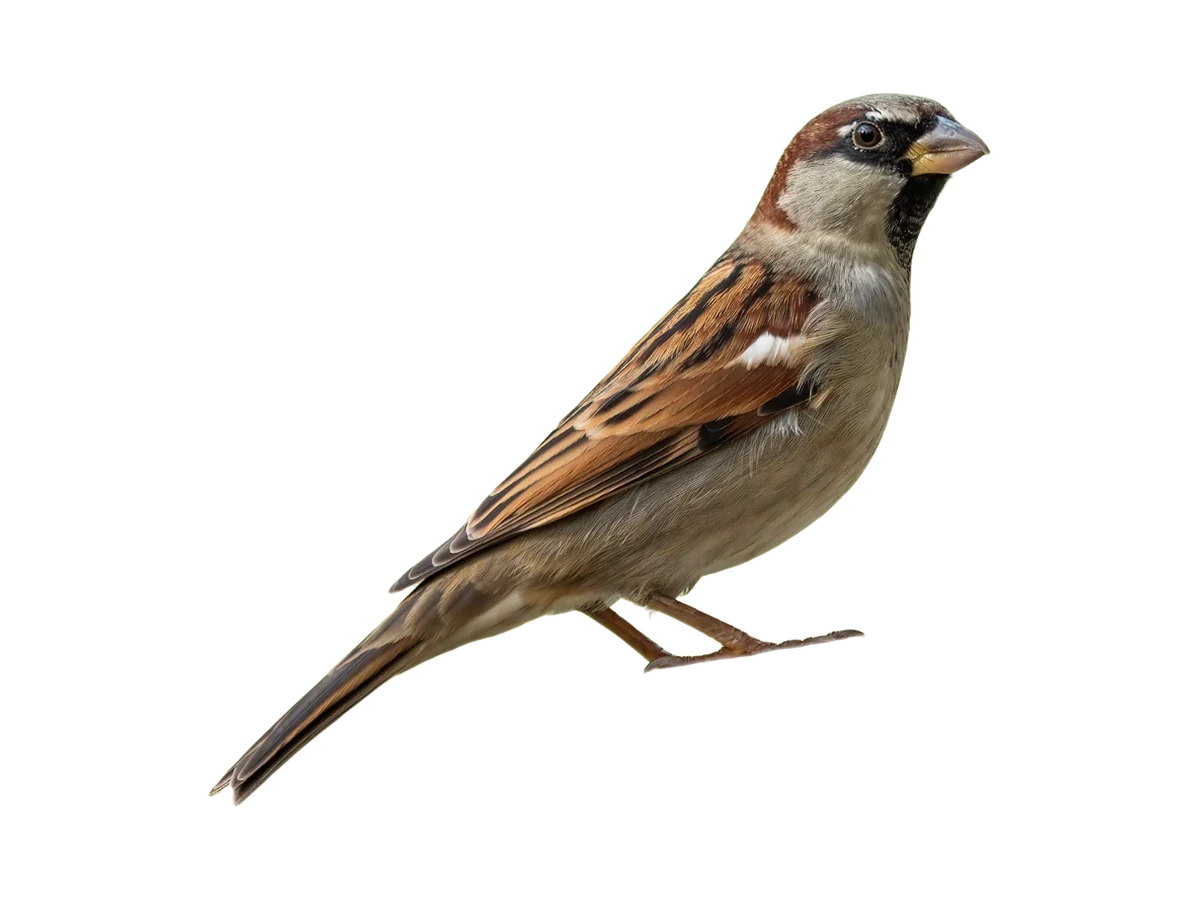
Observation focus
How to identify the House Sparrow.
House Sparrows are compact, sociable birds that live closely alongside people. Introduced to North America in the nineteenth century, they now gather around buildings, farms, parking areas, and feeders across most of the continent.
- Male: gray crown, pale cheek, and a dark throat bib.
- Warm chestnut and black patterning across the back and wings.
- Short, thick bill and compact shape in ground-feeding flocks.
Meet the bird
What kind of bird is the House Sparrow?
House Sparrows are compact, sociable birds that live closely alongside people. Introduced to North America in the nineteenth century, they now gather around buildings, farms, parking areas, and feeders across most of the continent.
Where to look
Where can you find the House Sparrow?
Watch the ground around cafés, barns, hedges, and feeders for small flocks hopping rather than walking. Males show the strongest head and bib pattern; females are plainer buff-brown with a pale eyebrow.
Listen in the field
What does the House Sparrow sound like?
The everyday call is a simple, repeated “tschilp” or chirp. House Sparrow groups overlap many calls, so listen for the steady repetition near buildings and then locate the flock.
House Sparrow “tschilp” call, recorded by Joseph Sardin
Open audio fileA recording of the House Sparrow's typical “tschilp” call.
Original recording by Joseph Sardin · CC0 1.0. Bird Tone stores the cited recording for reliable playback. Original recording; Bird Tone made no audio edits. The recording loads only when requested and plays only after you press play.
Source check
Where do these identification notes come from?
These notes summarize beginner-facing identification, habitat, and behavior cues. Confirm a bird from several marks, its voice, and the setting rather than one color alone.