
Species field guide
American Woodcock identification guide
Scolopax minor · Sandpipers and allies · Scolopacidae
Observation focus
How to identify the American Woodcock.
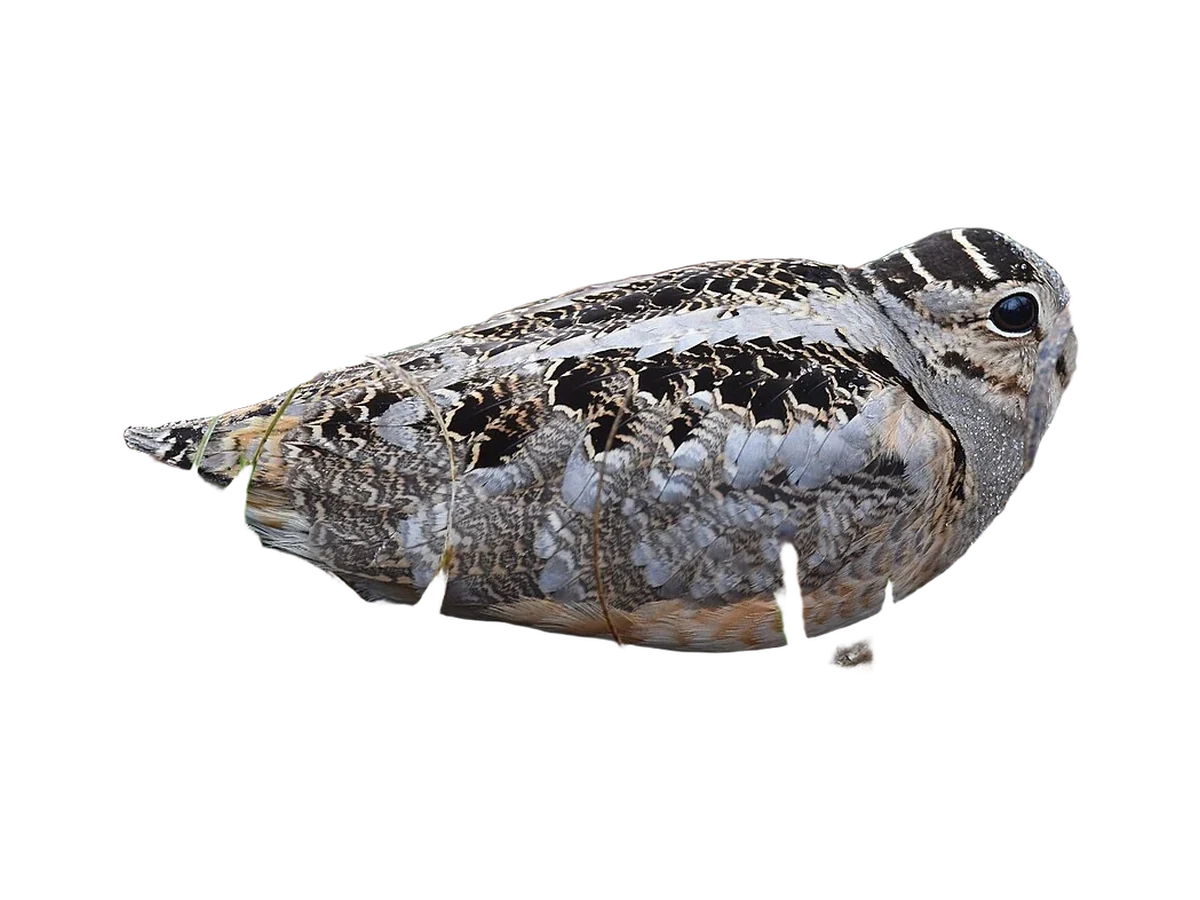
American Woodcocks are plump short-legged shorebirds of young forest and fields. Their long straight bill, rear-set eyes, cryptic upperparts, and spring display connect an unusual body plan with a memorable sound lesson.
- Plump short-necked body with a very long straight bill
- Large eyes set high and far back on the head
- Mottled brown black buff and gray upperparts against leaf litter
Meet the bird
What kind of bird is the American Woodcock?
American Woodcocks are plump short-legged shorebirds of young forest and fields. Their long straight bill, rear-set eyes, cryptic upperparts, and spring display connect an unusual body plan with a memorable sound lesson.
Where to look
Where can you find the American Woodcock?
At spring dusk, listen for repeated nasal peent calls from a clearing, then watch for a spiraling display flight rather than searching only for a camouflaged bird on the ground.
Listen in the field
What does the American Woodcock sound like?
A displaying male gives a repeated buzzy nasal peent on the ground between flights. The selected recording explicitly documents close-range peenting on display grounds.
American Woodcock peenting on display grounds, recorded by Jonathon Jongsma
Open audio fileA close field recording of an American Woodcock peenting on display grounds in Minnesota.
Original recording by Jonathon Jongsma · CC BY-SA 3.0. Bird Tone stores the cited recording for reliable playback. Original Ogg Vorbis recording; Bird Tone made no audio edits. The recording loads only when requested and plays only after you press play.
Source check
Where do these identification notes come from?
These notes summarize beginner-facing identification, habitat, and behavior cues. Confirm a bird from several marks, its voice, and the setting rather than one color alone.