
Species field guide
Secretarybird identification guide
Sagittarius serpentarius · Secretarybirds · Sagittariidae
Observation focus
How to identify the Secretarybird.
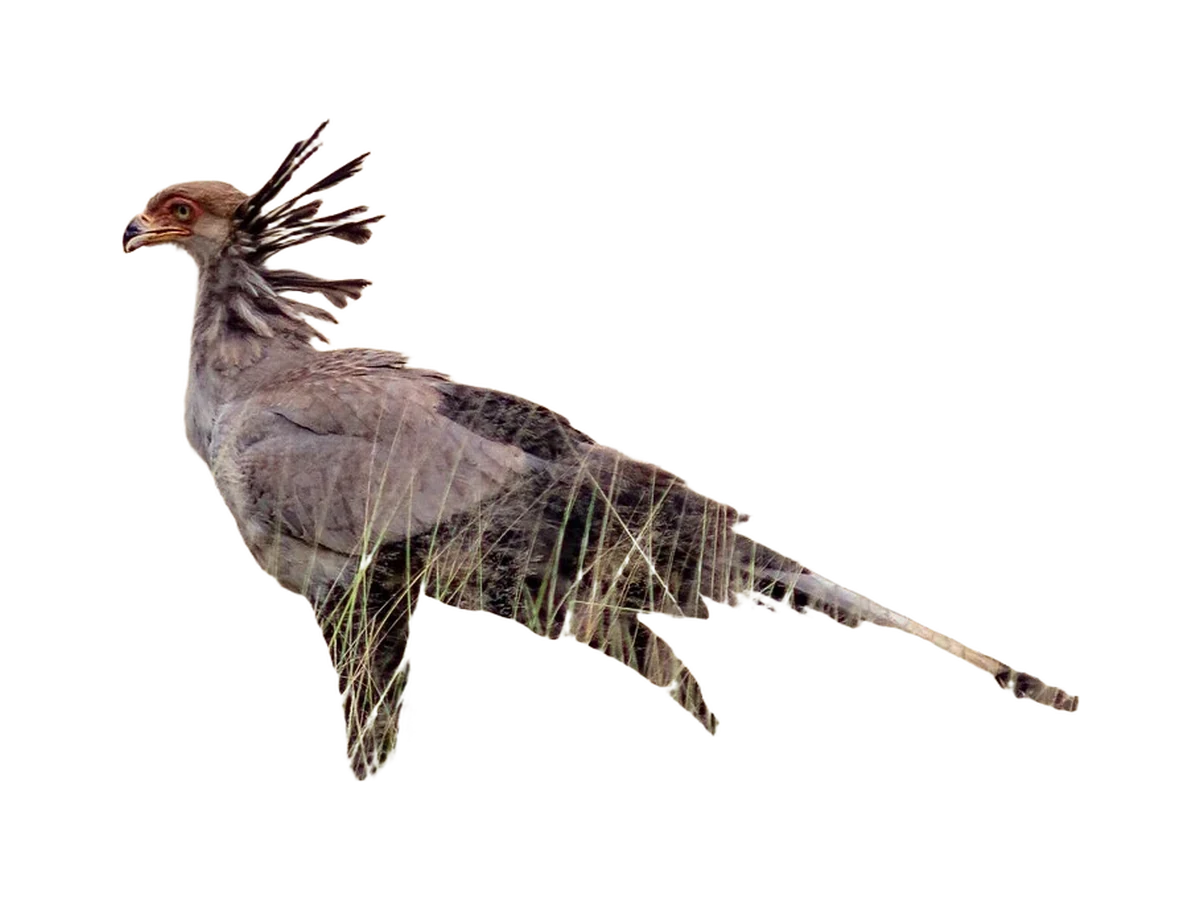
Secretarybirds are unmistakable terrestrial raptors with very long legs, gray-black plumage, orange facial skin, crest feathers, and elongated central tail feathers. Their upright outline provides a shape lesson that no compact songbird duplicates.
- Very long bare legs under an eagle-like body
- Long dark crest feathers behind the head
- Orange facial skin and elongated central tail feathers
Meet the bird
What kind of bird is the Secretarybird?
Secretarybirds are unmistakable terrestrial raptors with very long legs, gray-black plumage, orange facial skin, crest feathers, and elongated central tail feathers. Their upright outline provides a shape lesson that no compact songbird duplicates.
Where to look
Where can you find the Secretarybird?
Scan open grassland for a tall walking raptor and confirm the crest, orange face, black flight feathers, and long central tail rather than treating any long-legged bird as a Secretarybird.
Listen in the field
What does the Secretarybird sound like?
This recording contains a Secretarybird call. Use it as a listening example alongside the bird's shape and field marks rather than as a guide to a specific call type.
Secretarybird call — project-owner recording, recorded by Bird Tone project owner
Open audio fileA Secretarybird call used with the recordist's permission.
Original recording by Bird Tone project owner · Used with permission. Bird Tone stores the cited recording for reliable playback. Bird Tone removed container metadata and converted the supplied AAC/M4A recording to mono Ogg Vorbis at quality 5 without trimming. The recording loads only when requested and plays only after you press play.
Source check
Where do these identification notes come from?
These notes summarize beginner-facing identification, habitat, and behavior cues. Confirm a bird from several marks, its voice, and the setting rather than one color alone.